

The vintage band tee market is one of the most exciting — and most counterfeited — categories in fashion. A genuine 1981 Pretenders tour shirt and a 2019 reproduction of the same graphic can look nearly identical in a thumbnail. Knowing the difference is the difference between buying a piece of history and buying a costume.
We source vintage band tees constantly at Sold Out Society. Here is exactly what we look at.
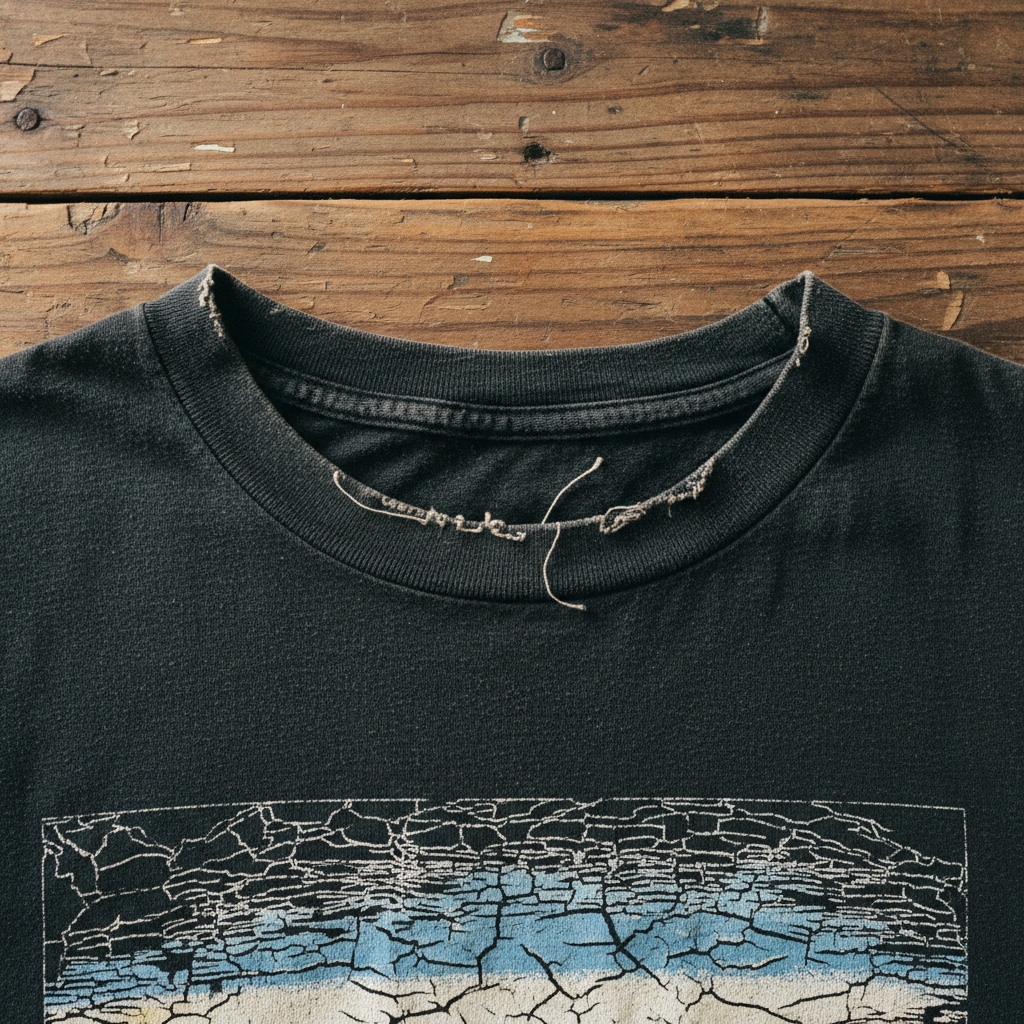
1. Check the Label First
The label is the fastest tell. Pre-90s vintage tees were made on blanks by brands like Screen Stars, Fruit of the Loom (the vintage version with the original logo), Hanes Beefy-T, and Delta Pro Weight. Each of these labels has a specific look that changed over time — Screen Stars used in the 70s and 80s looks different from Screen Stars in the 90s. If you know your blank labels, you can date a shirt within a few years just from the tag.
Red flags: any label that looks too crisp, too modern, or uses fonts and materials that weren't around when the shirt was supposedly made. Also watch for cut-out labels — some reproductions remove the tag to obscure the blank brand.
2. Single Stitch vs Double Stitch
Pre-1994 tees are almost universally single stitched at the sleeves and hem. Single stitch means one row of stitching. After the mid-90s, most mass production shifted to double stitch because it's faster and cheaper. If someone is selling you a "1979 tour tee" with double stitched sleeves, it is not from 1979.
Check the sleeve hem and the bottom hem. Run your finger along the edge. One row of stitching: could be authentic. Two rows: post-mid-90s at the earliest.
3. The Graphic — Cracking, Fading, and Ink Type
Genuine vintage screen prints age in a specific way. The ink sits on top of the fabric and over decades develops a network of fine cracks — especially on darker, more saturated graphics. The cracking should look organic and consistent with the age of the shirt. It should not look uniform or artificially applied.
Fading is similar. A genuine 40-year-old shirt has faded from washing, wearing, and time — not from a stone-wash process applied to a new shirt. Genuine fade has variation: the high points of the graphic fade faster, the recessed areas hold color longer.
Modern reproductions often use water-based or discharge inks that look different from the plastisol inks used in original vintage production. Once you've handled enough real vintage, the ink feel becomes a reliable tell.
4. The Fabric Weight and Feel
Vintage cotton is lighter, softer, and has a specific drape that modern tees don't replicate. Decades of washing break down the cotton fibers in a way that can't be artificially reproduced — the shirt gets thinner, softer, and more worn-in in a way that feels completely different from a new shirt that's been artificially distressed.
Pick up a genuine 1980s Screen Stars tee and a modern reproduction side by side. The difference in fabric hand is immediately obvious once you know what you're feeling for.
5. Research the Actual Tour or Event
If a shirt is being sold as a specific tour tee — "Rolling Stones 1975 Tour," "Metallica 1988 Damaged Justice" — verify that the tour actually happened and that the graphic matches the era. Tour tees were made for specific legs of specific tours. The fonts, colors, and imagery are documentable. If the design doesn't match what was actually produced for that tour, it is not from that tour.
Buy From People Who Know
The safest way to buy authentic vintage band tees is from a source that handles real vintage every day and knows what they're looking at. At Sold Out Society, every vintage piece we carry has been handled, examined, and sourced by someone who lives in this market. We don't sell reproductions. We don't guess.
Browse our current vintage band tee selection online or come through the shop in downtown LA at 113 E 11th St.