

For Us By Us. Four words that defined an era of Black American fashion, built a brand that hit $350 million in annual revenue by the late 90s, and then largely disappeared from mainstream retail — only to come back harder than ever in the vintage market.
FUBU is having a moment. And if you know anything about how streetwear cycles work, you already knew it was coming.
The Brand That Built an Era
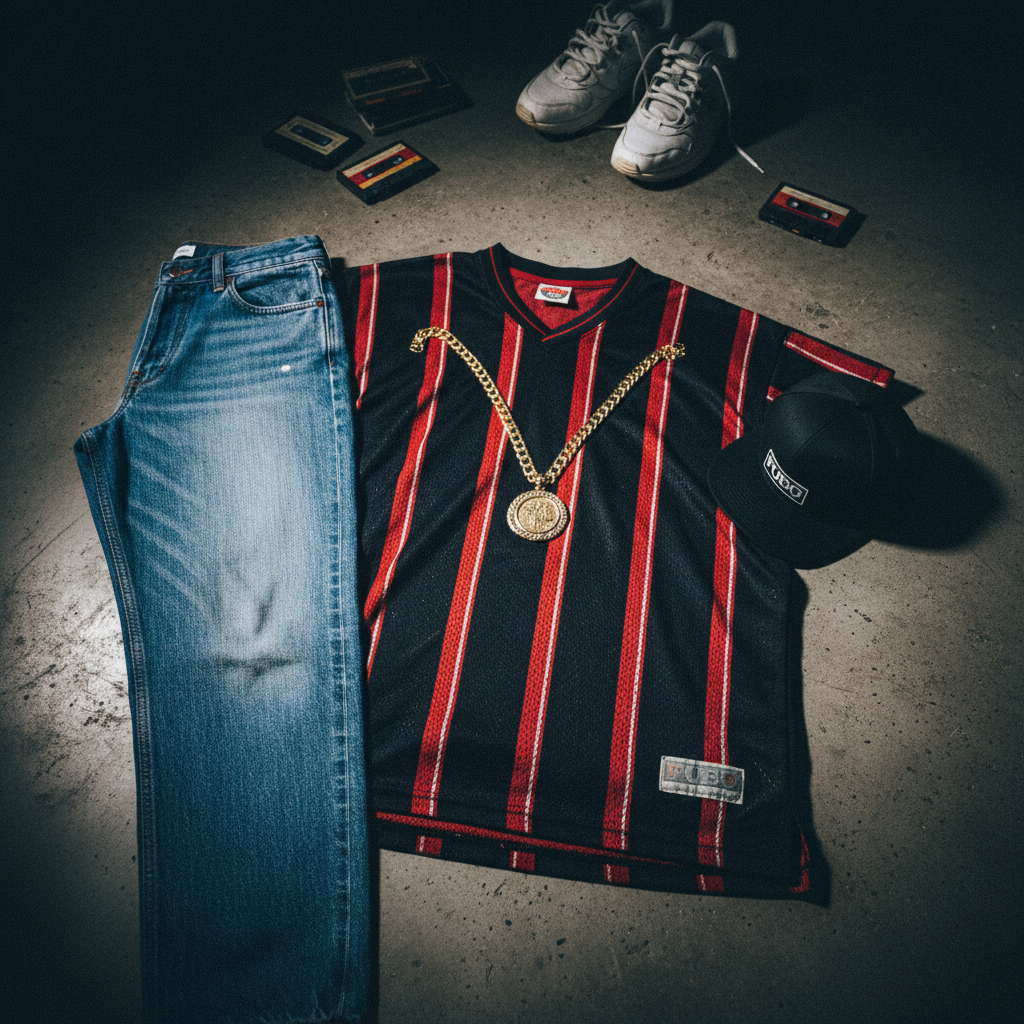
FUBU was founded in Queens, New York in 1992 by Daymond John and three partners, sewing and selling hats out of Daymond's mother's house. By the mid-90s, the brand was everywhere — LL Cool J wore it in a Gap commercial (without Gap knowing), Jay-Z repped it, and the brand became the defining uniform of hip-hop's commercial peak. The hockey jerseys. The velour sets. The puffer jackets with the oversized FUBU logo. If you were in hip-hop in the 90s, you wore FUBU or you knew someone who did.
By the mid-2000s, FUBU had faded from the mainstream — partly victim of its own success, partly a casualty of the shift toward luxury streetwear that came with the rise of labels like Rocawear and Sean John. The brand didn't disappear, but it stepped back from the cultural center stage.
Why It's Back Now
The vintage market moves on a roughly 20-30 year cycle. Whatever was culturally dominant 25 years ago starts becoming collectible — first among the people who lived it, then among a younger generation that discovered it through music, film, and social media. The 90s hip-hop aesthetic is fully in that zone right now.
FUBU specifically benefits from something beyond just nostalgia: cultural significance. The brand was built by Black entrepreneurs for Black culture during one of the most creatively explosive eras in American music history. That story resonates differently now than it did during the brand's peak — people understand what FUBU represented in a way that adds real weight to owning a piece of it.
Add in the fact that authentic 90s FUBU in good condition is genuinely scarce — these pieces were worn hard, not collected — and you have a perfect storm for resale value appreciation.
What to Look For
When buying vintage FUBU, the most valuable pieces are the hockey jerseys, the oversized puffer jackets, the velour tracksuits, and anything with heavy logo application. Condition matters — look for pieces with minimal fading, intact stitching, and original tags if possible. Size matters too: XL and 2X pieces from this era were made with the oversized silhouette of the time and wear completely differently than modern oversized cuts.
Authenticity markers: vintage FUBU has a specific label construction, a particular way the logo is applied, and a fabric weight that modern reproductions don't replicate. When in doubt, buy from a source that knows the difference.
We Carry It
Sold Out Society carries authentic vintage FUBU pieces sourced directly from the downtown LA fashion district. When we have it, it moves fast. Check the online store for current availability — and if you're in the city, come through the shop at 113 E 11th St to see what's in the building.